
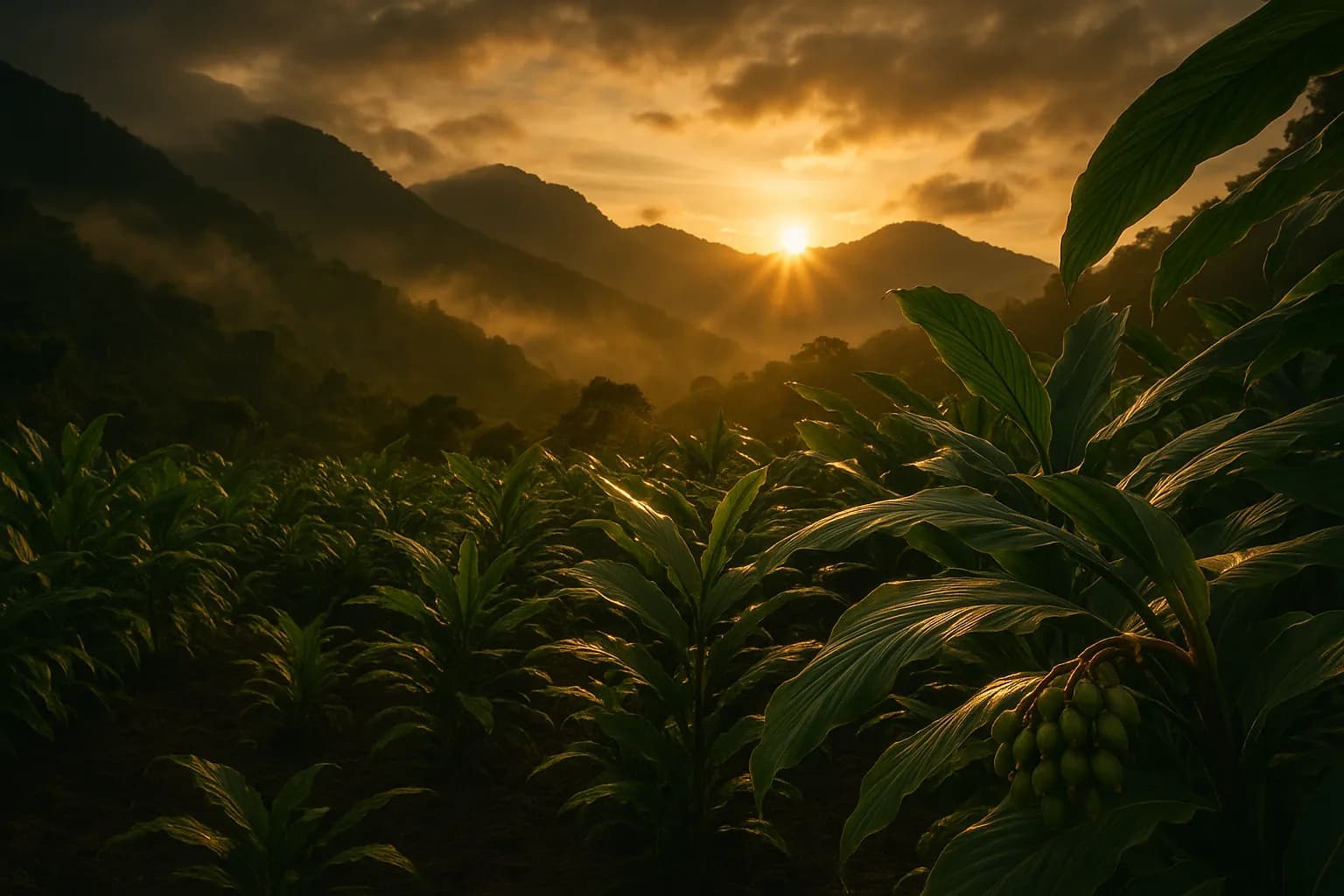

Green cardamom has an unusual commercial shape. The buyers who pay the most for it are concentrated in one region, and in 2026 that region sits behind the most disrupted shipping corridor in the world. For anyone selling Tanzanian cardamom into the Gulf, those two facts have to be held together.
Why the Gulf sets the price
The Gulf and North Africa take the majority of the world's cardamom imports, and the Gulf in particular pays a premium for the appearance grades. Cardamom goes into gahwa, the Arabic coffee served in homes and offices across the region, and the pods are visible in the pot. That visibility is why bold, deep green pods earn what they do: the buyer is paying for colour and size that a grinder would not care about.
So the premium end of the cardamom market is a destination market, not a product category. And that destination is where the freight problem is.
The geography that matters
Jebel Ali sits inside the Persian Gulf, which means a vessel calling there transits the Strait of Hormuz. Fujairah, Sohar and Salalah sit on the Gulf of Oman side and do not. Through 2026 that distinction stopped being a piece of trivia and became a line item, with carriers keeping vessels out of the Gulf at points during the year and surcharges applied across Gulf-linked corridors.
The position in October 2026
By mid-October the east-coast workaround had become the normal route rather than a contingency. Enterprise reported on 19 October 2026 that most shipowners would not risk their vessels being trapped behind the strait, so containers bound for the UAE and northern Oman were landing at Khorfakkan and the other east-coast ports, and at Oman's Sohar. Cargo landed there crosses the Hajar mountains by truck to reach Dubai, and the same report cites a study putting overland rerouting at 2.4 to 4.2 times the cost per tonne-kilometre. Fujairah, the report notes, has limited container capacity.
For a cardamom buyer in Dubai that means two questions the July version of this guide did not need to ask so bluntly: which port will the carton actually discharge at, and who pays for and controls the truck leg into the city. A CFR or CIF quote to Jebel Ali may not describe the route the cargo really takes.
“This guide was first written in late July 2026 and updated on 20 October 2026. Routing conditions have changed repeatedly through the year. Confirm the current position with your forwarder before you price a shipment.”
What it does to a cardamom shipment specifically
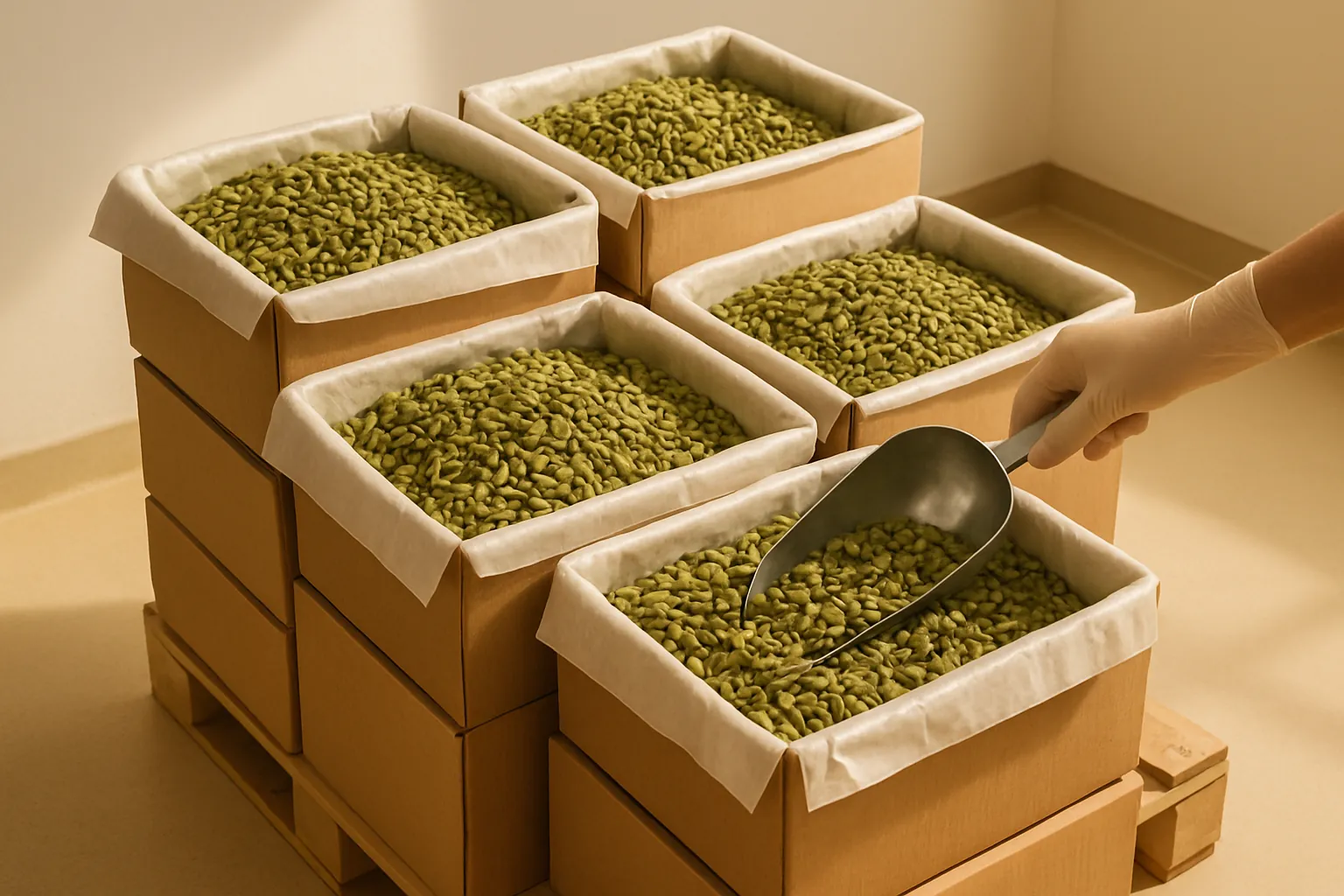
Cardamom is affected differently from the bulk crops, and mostly for one reason: value density. A cardamom order is often measured in hundreds of kilos rather than full containers, and the value per kilo is high enough that freight is a smaller share of the delivered cost than it is for sesame or raw cashew nuts. A surcharge that would be painful on a container of seed is absorbable on a few hundred kilos of bold green pods.
That cuts both ways. It means air freight is a genuine option for cardamom when a deadline is real, in a way it rarely is for bulk commodities. It also means small consignments end up in shared LCL space, where cardamom's habit of absorbing odours from neighbouring cargo becomes a live quality risk rather than a theoretical one.
Lead time is the real cost
For a Gulf buyer the sharper problem is usually not the surcharge. It is the calendar. Buyers build inventory ahead of Ramadan, and Ramadan moves earlier through the Western calendar by roughly eleven days a year, so the ordering date that worked in one cycle is already wrong for the next. Layer re-routing and congestion on top and the gap between when you order and when the stock is sellable widens again.
The discipline that fixes this is simple and almost nobody applies it: work backwards from the date the cardamom has to be on the shelf, and add the disruption allowance explicitly rather than assuming last cycle's transit time. Freight time is not lead time. Grading, testing, booking, the sailing, customs and the final leg all sit on top.
What to ask before you commit
- Which discharge port is the quote based on, and is it inside or outside the Strait of Hormuz?
- If the cargo lands on the east coast, who arranges and pays for the truck leg to Dubai or the final warehouse?
- Is the freight inside the price? On CIF and CFR it is the seller's exposure; on FOB it is yours.
- How long is the price valid, and is that validity tied to an actual booking?
- Is the consignment moving FCL, LCL or by air, and if LCL, what protects the pods from odour transfer?
- Does the moisture spec still have margin if the routing adds days?
- What is the realistic date on the shelf, not the realistic date on the water?
Cardamom rewards buyers who plan early, and disruption widens the gap between those who do and those who do not. If you are working a Gulf shipment and want the routing options and lead-time allowance set out against your grade and spec before you commit, ask us and we will put the numbers in front of you.
Related reading and sources
- Wholesale green cardamom supplier overview- MOQ, grades, process and documents
- Cardamom for Arabic coffee (gahwa)- Grades Gulf buyers choose
- Cardamom shelf life, storage and shipping- Protecting colour and aroma in transit
- Enterprise: the war is pushing Gulf container trade to ports outside Hormuz- 19 October 2026
Related reading

Leave a Comment
Your email address will not be published.